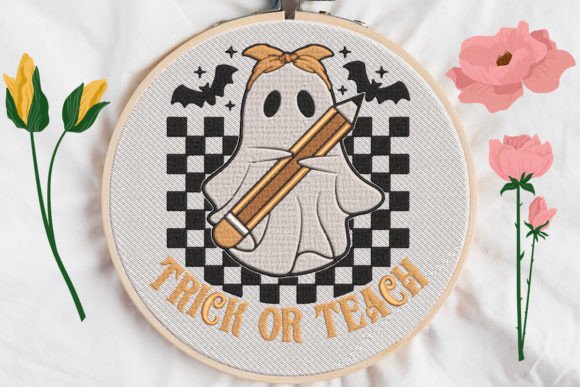
Trick or Teach Ghost: A Merch Design Review
As an embroidery designer who specializes in commercial branding and small business merchandise, I approach every new digitization file with a critical eye. When evaluating the Trick or Teach Ghost Holding Pencil machine embroidery design, my primary focus is not just on its whimsical aesthetic, but on its viability as a functional asset for apparel decorators, Etsy sellers, and local businesses. While this design falls under the Back To School category, its potential extends far beyond seasonal classroom decor. For small business owners and creative studios, this graphic offers a unique opportunity to blend playful personality with professional presentation, provided it is executed with technical precision.
Visual Personality and Brand Identity Alignment
The first impression of the Trick or Teach Ghost Holding Pencil is undeniably charming yet structured. Unlike generic Halloween clipart, the inclusion of the pencil anchors the design in an educational or creative context. For a handmade product brand, tutoring center, children’s boutique, or even a quirky coffee shop launching a fall menu, this design communicates approachability. It strikes a balance between festive and functional. From a brand identity perspective, it signals that a business is current, culturally aware, and unafraid to show personality. However, for corporate uniforms or high-end luxury goods, the playful nature may clash with established visual guidelines. This design is best suited for businesses where customer engagement relies on warmth, creativity, and community connection rather than strict formality.
Commercial Applications for Small Business Merch
In real-world commercial embroidery scenarios, versatility is key. The Trick or Teach Ghost Holding Pencil performs exceptionally well across various branded merchandise categories. For staff uniforms in casual environments like bakeries or pet grooming salons, this design works beautifully as a left-chest logo accent. It adds a seasonal touch without compromising the professional look of custom apparel. For Etsy sellers and craft business assets, this graphic is ideal for creating limited-edition tote bag designs or autumn-themed product packaging accents. The pencil element specifically resonates with stationery shops, art supply stores, and creative workshops looking to reinforce their niche while celebrating the season.
Furthermore, this design has strong potential as an embroidered patch. Because the ghost shape typically offers a defined outline, it can be adapted into a merrowed-edge patch for caps, backpacks, or denim jackets. This transforms a simple digital embroidery file into a tangible collectible that customers can purchase separately or receive as a loyalty gift. For event merch, such as school fundraisers or community fall festivals, the design serves as an excellent unifying visual that appeals to both parents and students.
Technical Considerations for Production Quality
While the concept is strong, the physical execution requires careful attention to stitch density and fabric texture. As with any character-based machine embroidery design, the holding pencil presents specific challenges. Thin linear elements like pencils can sometimes cause puckering or thread breaks if the stitch width is too narrow or the underlay is insufficient. Before running production batches, I strongly advise testing the design on the actual substrate you intend to use. A design that stitches out perfectly on a stable cotton twill cap front may distort on a stretchy jersey knit t-shirt or a textured towel.
Stabilizer selection is non-negotiable here. For lightweight fabrics often used in small business merch, a cut-away stabilizer provides the necessary support to maintain registration between the ghost’s body and the pencil detail. If you are producing apron embroidery, ensure the hoop size accommodates the full design without requiring excessive re-hooping, which increases margin for error. Additionally, consider the washability factor. Items like work shirts and tote bags undergo frequent laundering; verifying that the thread colors remain vibrant and the stitching remains secure after multiple wash cycles is essential for maintaining product value and customer trust.
Navigating Size Limitations and Detail Integrity
One area where caution is required is scaling. The Trick or Teach Ghost Holding Pencil likely contains intricate details that define its character. Reducing this design to fit tiny spaces, such as sleeve cuffs or baby onesies, risks losing definition. The pencil may become a blurred line, and facial features could merge into indistinct blobs. Always check the minimum recommended size within your embroidery software before resizing. If you need a smaller version for specific applications, it is often better to source or digitize a simplified variation rather than forcing a complex design into an inadequate space.
Cap embroidery also demands scrutiny. Curved surfaces can distort horizontal lines, potentially making the pencil appear bent or misaligned. Testing on a curved cap frame is vital. Similarly, when working with dark uniforms, ensure sufficient contrast between the thread colors and the garment base. White ghosts on white shirts rely entirely on shadow stitching and texture for visibility, which can look muddy if not digitized with adequate spacing. High-contrast thread choices ensure the design pops and remains legible from a distance, which is crucial for brand recognition in retail or service environments.
Designer Notes for Professional Execution
To maximize the ROI of this digital embroidery file, follow these practical steps before committing to bulk production:
- Create a Printable Mockup: Before stitching, place the design digitally on photos of your actual products. This helps visualize scale and placement relative to seams, pockets, and other design assets.
- Test in Black and White: Run a grayscale test stitch-out first. This reveals structural issues, density problems, or registration errors without wasting expensive colored threads.
- Verify Commercial Licensing: Never assume a machine embroidery design includes commercial rights. Confirm the license terms explicitly allow for selling finished products or using the design on business merchandise. Protecting your business legally is as important as the stitch quality.
- Check Thread Color Contrast: Evaluate your thread palette against various fabric backgrounds. What looks good on screen may lack impact on physical fabric. Adjust thread colors to match your specific brand identity rather than relying solely on the designer’s default chart.
- Inspect Spacing and Jump Stitches: Review the digitizing path. Excessive jump stitches increase production time and post-processing labor. Trimming efficiently ensures a cleaner finished product and faster turnaround for client orders.
- Compare Beside Other Assets: Ensure the Trick or Teach Ghost Holding Pencil visually harmonizes with your existing logo and typography. Visual consistency builds professional credibility, even when using playful seasonal graphics.
Elevating Handmade Products Through Strategic Design
Ultimately, the success of the Trick or Teach Ghost Holding Pencil in a business context depends on intentional application. It is more than just a cute seasonal graphic; it is a tool for storytelling and customer connection. When used thoughtfully on tote bags, aprons, or patches, it transforms standard inventory into desirable, emotionally resonant merchandise. By respecting the technical requirements of stitch density, stabilizer choice, and appropriate sizing, embroidery shops and makers can deliver a finished product that feels premium and durable. This attention to detail reinforces buyer confidence and distinguishes your handmade product in a crowded marketplace. Whether you are decorating for a local school event or expanding your shop’s autumn collection, treating this design with professional rigor ensures it delivers both charm and commercial value.