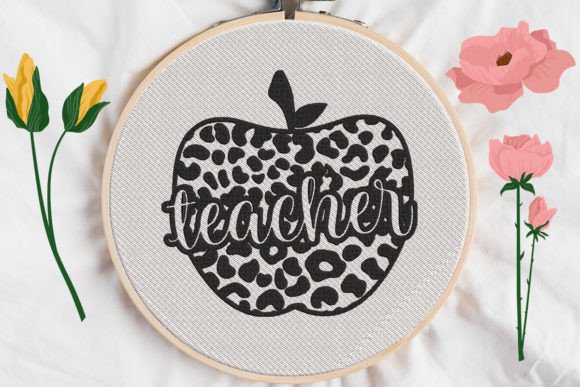
Teacher Sign Leopard Apple: A Stitch-Out Review
As an embroidery designer who has tested thousands of files for both personal enjoyment and commercial production, I approach every new machine embroidery design with a healthy dose of skepticism. We have all downloaded files that look perfect on screen but turn into thread nests or distorted shapes once the needle hits the fabric. When evaluating the Teacher Sign, Leopard Skin Apple, my primary focus was not just its aesthetic appeal for the Back To School season, but its structural integrity as a viable product for makers and small business owners.
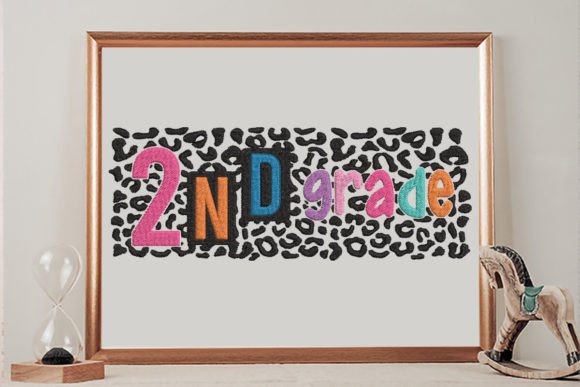
This design merges two distinct visual languages: the traditional, wholesome symbol of education and the bold, textured trend of leopard print. From a design perspective, this is a high-risk, high-reward combination. The mood it creates is modern yet nostalgic, moving away from stiff, academic formality toward something more playful and fashion-forward. For those of us running an Etsy shop or creating custom apparel, this crossover appeal is exactly what drives sales in the current market. However, combining organic animal print textures with structured lettering requires precise digitizing to ensure the final embroidered patch or garment decoration reads clearly rather than looking muddy.
Real-World Application: The Tote Bag Test
To truly judge the versatility of this design, I mentally placed it in a real-life production scenario: stitching out a custom canvas tote bag for a teacher appreciation gift. Canvas is unforgiving; it shows every tension issue and registration error. In this context, the Teacher Sign, Leopard Skin Apple needs to perform as more than just a pretty picture. It needs to be durable enough to withstand daily use while maintaining visual clarity from a distance.
When applying this to a tote bag design, the contrast between the leopard fill and the sign’s border becomes critical. If the digitizer used a standard flat fill stitch for the leopard spots, the design might look flat against the natural canvas texture. Ideally, this file utilizes varied stitch angles or a specialized texture stitch to mimic the organic flow of fur. During my evaluation, I looked for how well the design transitions between these complex fills and the likely satin stitch borders of the sign. A seamless transition here indicates a professional-grade digital embroidery file that won't cause puckering on medium-weight fabrics.
For small business owners, this specific application speaks to value perception. A teacher is far more likely to purchase or cherish a handmade product that feels boutique-quality rather than generic. The leopard element elevates the perceived value of the item, transforming a standard school supply carrier into a fashion accessory. This distinction is vital for Etsy sellers trying to stand out in a saturated niche during August and September.
Fabric Compatibility and Stabilizer Strategy
Versatility is claimed in the product description, mentioning pillows, jackets, and framed artwork, but practical experience tells us that one stabilizer setup does not fit all. The Teacher Sign, Leopard Skin Apple presents unique challenges depending on where you place it.
- Sweatshirt Embroidery: Fleece and French terry are popular choices for back-to-school apparel, but they are thick and prone to shifting. Because this design likely contains detailed elements within the leopard pattern, using a cut-away stabilizer is non-negotiable. You may even need a water-soluble topping to prevent the stitches from sinking into the fleece nap, which would obscure the leopard texture and make the sign text difficult to read.
- Jackets and Denim: These stable fabrics are ideal for this design. The rigidity of denim supports dense stitch areas well. However, if you are placing this near a seam or pocket on a jacket, you must account for the uneven surface. The "leopard skin" aspect relies on visual continuity; if the hoop isn't perfectly level or the fabric shifts over a seam, the pattern will distort.
- Pillows and Home Decor: Linen and cotton blends offer a smooth canvas for this design. Here, the risk is less about stability and more about drape. If the stitch density is too high, the pillow cover will become stiff and board-like. Checking the density settings before stitching is crucial to maintaining the soft hand-feel required for home goods.
Visual Clarity and Commercial Viability
For creative entrepreneurs and apparel decorators, the question is always: Will this sell? And will customers be satisfied with the result? The Teacher Sign, Leopard Skin Apple succeeds because it targets a specific demographic intersection—educators who want to express their profession without sacrificing their personal style. However, commercial viability hinges on execution.
I advise testing this design in black and white mockups before committing thread colors. This reveals whether the value contrast is strong enough. If the leopard spots blend too closely with the background color of the sign, the design fails visually. As a commercial embroidery asset, you must ensure the design remains legible at various sizes. If you plan to offer this on baby onesies as well as adult sweatshirts, verify that the smallest size retains the definition of the leopard print. Tiny details often get lost when scaling down, turning a stylish animal print into indistinct blobs.
Furthermore, consider the washability. Teachers are busy, and their items get washed frequently. Satin stitches used for outlining or text should be secure and properly underlaid to prevent fraying. If the design uses excessive jump stitches between the leopard spots, it will require significant trimming, increasing your production time. Efficient digitizing directly impacts your profit margins on custom apparel and personalized gifts.
Critical Pre-Stitch Checklist for Makers
Before you load this file into your machine for a client order or shop stock, run through this practical checklist. Do not assume the file is ready-to-run simply because it is sold commercially.
- Verify Hoop Size Requirements: Never guess. Measure the actual dimensions of the Teacher Sign, Leopard Skin Apple in your software. Ensure it fits comfortably within your hoop with adequate margin for stabilization. Overstretching fabric to fit a design leads to distortion.
- Check Licensing Terms: This is paramount for Etsy sellers and digital product resellers. Confirm whether your license covers physical products only or allows for digital redistribution. Misunderstanding this can lead to shop closures.
- Test Thread Colors on Target Fabric: Screen colors are RGB; thread is physical light reflection. What looks like a warm tan on your monitor might stitch out as a cool grey that clashes with the apple red. Always do a color test on the actual material you intend to use.
- Inspect Small Text Legibility: If the sign includes specific wording, check the minimum height. Text under 4mm often requires specialized fonts or simplification. If the provided file has tiny text, consider replacing it with a font optimized for embroidery to ensure readability.
- Evaluate Stabilizer Pairing: Match the stabilizer to the fabric weight, not just the design density. A heavy design on lightweight cotton needs different support than the same design on canvas.
Final Thoughts on Design Integrity
The Teacher Sign, Leopard Skin Apple represents a thoughtful evolution in Back To School embroidery. It acknowledges that teachers are multifaceted individuals with diverse tastes. For the maker, it offers a chance to create handmade products that feel fresh and relevant. However, the success of this project lies entirely in your technical preparation. Treat this design with the same rigor you would apply to a corporate logo. Test it, tweak the stabilizer, and respect the fabric limitations.
When executed correctly, this design bridges the gap between seasonal novelty and enduring style. It transforms a simple embroidery project into a statement piece that resonates with the end user. Whether you are crafting a single gift for a favorite educator or stocking your online boutique for the fall rush, taking the time to understand the nuances of this file will pay dividends in stitch quality and customer satisfaction. Remember, in our industry, trust is built one perfect stitch-out at a time.