Back to School Smiling Outline Apple Review
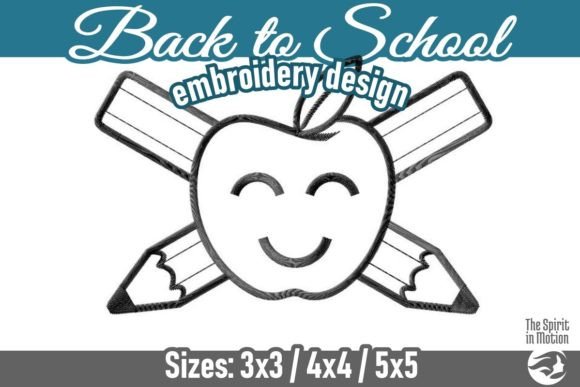
As an embroidery designer who has stitched out thousands of files for both personal enjoyment and commercial client work, I approach every new machine embroidery design with a critical eye. It is not enough for a graphic to look cute on a screen; it must translate into thread without puckering, breaking, or losing its charm. When evaluating the Back to School Smiling Outline Apple, my first impression was one of refreshing simplicity. In a market often saturated with overly dense, complex digitizing that eats through thread and time, this design offers a playful, whimsical aesthetic that relies on clean lines rather than heavy coverage. The mood is undeniably cheerful, capturing that nostalgic excitement of a fresh academic year without feeling juvenile or generic.
The outline style immediately signals versatility. Unlike a traditional applique design or a heavy fill stitch motif, this artwork uses negative space as a primary design element. For those of us running Etsy seller shops or managing craft business inventory, this is a significant advantage. It suggests faster run times and less stabilizer buildup, which directly impacts profit margins and production speed. However, outline designs are unforgiving. There is nowhere for registration errors to hide. My initial assessment focused heavily on whether the digitizer understood the balance between artistic flow and mechanical reality.
Real-World Application: Stitching a Teacher Tote
To truly judge the viability of the Back to School Smiling Outline Apple, I mentally placed it in a specific, high-demand scenario: customizing a canvas tote bag for a teacher appreciation gift. This is a staple personalized gift item that requires durability and visual clarity. Canvas is a textured fabric that can sometimes swallow fine details, so I evaluated how the running stitch or satin column outline would perform against that grain.
In this real-life application, the design’s open nature allows the natural texture of the canvas to show through, creating a cohesive, organic feel rather than a plastic-like patch sitting on top of the material. For a tote bag design, this breathability is crucial. Heavy designs can make bags stiff and unappealing to carry. Furthermore, because teachers often use these bags daily, the stitching needs to withstand wear. An outline design reduces the risk of thread abrasion compared to large fill areas. From a business perspective, this makes the Back to School Smiling Outline Apple an excellent candidate for bundling with other school-themed assets to create value-packed digital embroidery file collections for fellow makers.
Fabric Considerations and Technical Limitations
While the design shines on stable woven fabrics like canvas, denim, or twill, caution is required when venturing into other territories. As a reviewer, I must emphasize where this design might struggle:
- Stretchy Knits: If you are planning sweatshirt embroidery or working with jersey knits, the lack of internal structure in an outline design means you cannot rely on the stitches themselves to stabilize the fabric. You will need a robust cut-away stabilizer and potentially a water-soluble topping to prevent the needle from pushing the fabric down into the throat plate.
- High-Pile Fabrics: On terry cloth towels or fleece blankets, thin outlines can disappear. If using this for baby embroidery on plush items, verify the stitch density and width. You may need to add an underlay foundation or choose a bolder variation if available.
- Dark Fabrics: Outline designs rely entirely on contrast. On black or navy garments, ensure your thread colors are bright enough to pop. A white or bright red outline works beautifully, but subtle pastels may fail to register visually from a distance.
- Curved Surfaces: Hooping caps or curved sleeves requires precision. Because this design likely features continuous lines, any hoop shift will be glaringly obvious. Test your hooping technique before committing to a final finished product.
Commercial Viability and Brand Consistency
For creative entrepreneurs and apparel decorators, the Back to School Smiling Outline Apple represents more than just a seasonal graphic; it is a branding tool. Its clean, minimalist line art style pairs exceptionally well with modern typography. If you are selling custom apparel, this design leaves ample room for adding names, dates, or school mascots without creating a cluttered composition. This flexibility increases the perceived value of your handmade product because it looks intentional and professionally curated rather than slapped together.
When creating printable mockups for your online listings, this design photographs well. The lack of heavy shading means it renders clearly even in small thumbnail images on mobile devices. For small shop product photography, consider stitching samples on varying background colors to demonstrate versatility to potential buyers. This builds customer trust by showing exactly what they can expect from the embroidery project. Additionally, because the design is lightweight, it is ideal for items that require frequent washing, such as kitchen towels or children's clothing, as there is less thread mass to degrade over time.
Essential Designer Notes Before You Stitch
Before loading this embroidery file into your machine for a paid order or a cherished gift, adhere to these professional best practices:
- Verify Specifications: Always check the included documentation for exact hoop size requirements, stitch counts, and color changes. Never assume compatibility based solely on the visual preview.
- Test on Scrap: Outline designs are sensitive to tension issues. Run a test stitch-out on a scrap of your actual project fabric to ensure the top and bobbin threads are balanced. Loopy outlines ruin the crisp aesthetic instantly.
- Check Licensing: Confirm whether your purchase includes commercial rights for selling physical goods or if it is limited to personal use. This is vital for commercial embroidery businesses protecting their legal standing.
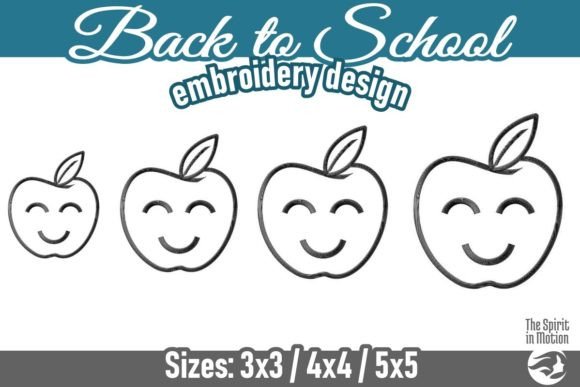
- Evaluate Small Details: Inspect the smiling face and stem area closely. If resizing the design significantly smaller, these delicate features may become too dense or merge. Use software to simulate the resize or stick to the original dimensions for optimal clarity.
- Mockup in Black and White: Before choosing thread, view the design in grayscale. This reveals the true structural integrity of the lines independent of color distraction, helping you identify potential weak points in the digitizing.
The Back to School Smiling Outline Apple succeeds because it respects the medium of embroidery. It does not try to be a photograph; it embraces the linear beauty of thread. Whether you are an educator stitching for your classroom, an Etsy seller preparing for the autumn rush, or a hobbyist making a holiday embroidery gift, this design offers a reliable, charming foundation. By understanding its technical nuances and applying proper stabilization techniques, you can transform this digital asset into a tangible piece of art that brings genuine joy to the recipient. Remember, the best design assets are those that empower your creativity while respecting the mechanical realities of your machine. Happy stitching!